
Metal vineyard posts that stay straight for decades.
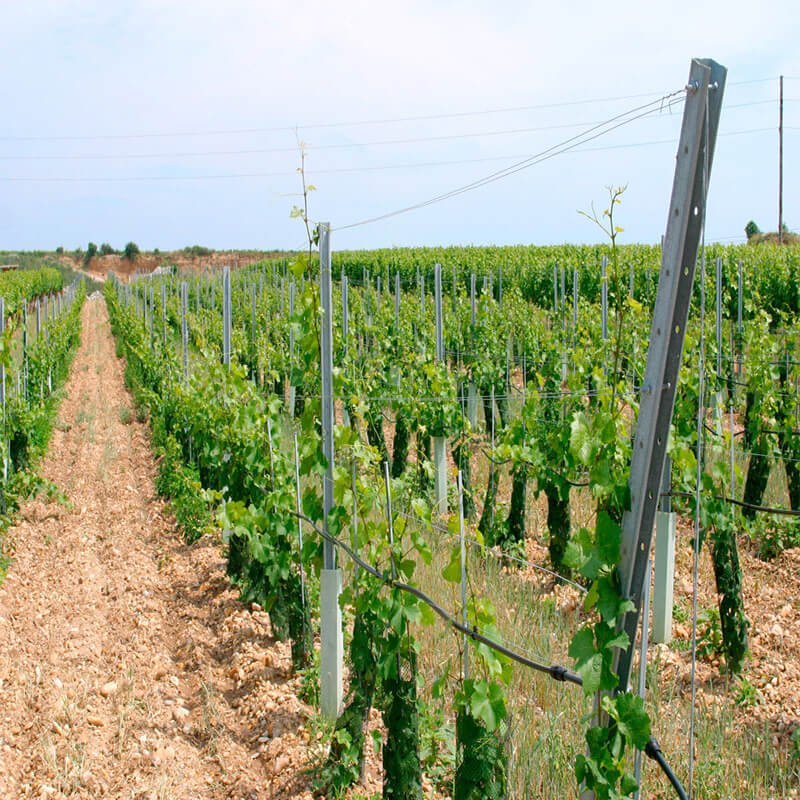
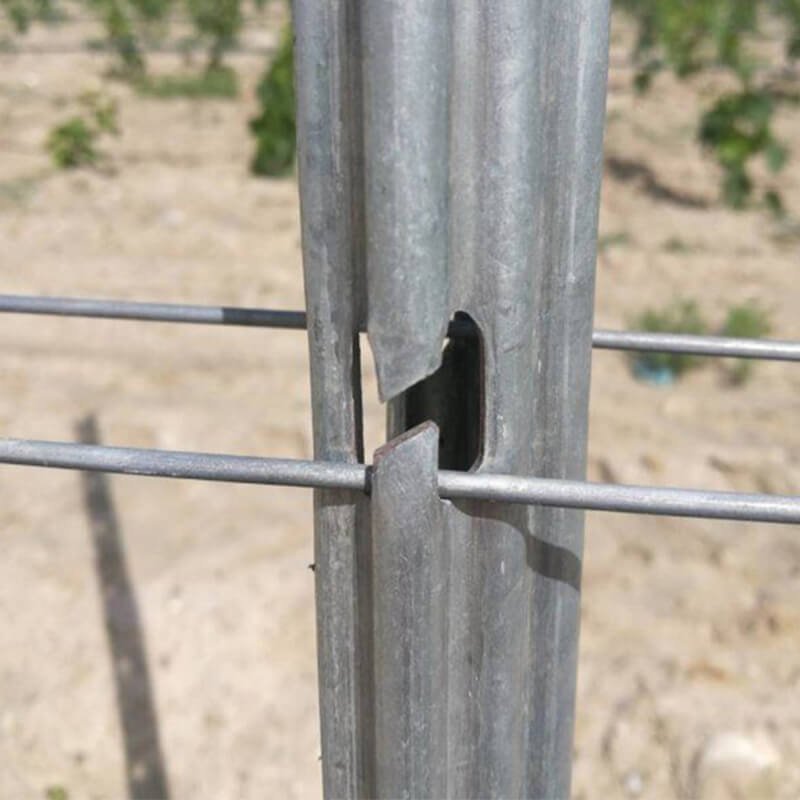
Rolled-edge steel line posts with pre-punched wire slots, made for grape rows. Drive them two feet into the ground, drop the wire in a slot, done. No clips, no staples, no rotting wood.
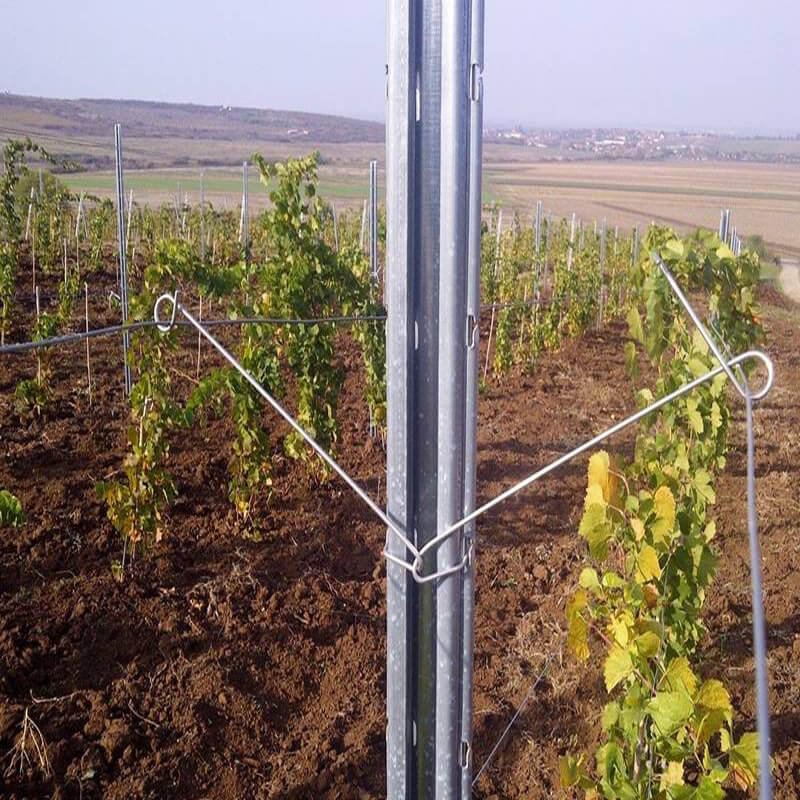
What you get with CHANGE vineyard posts.
1. Product introduction
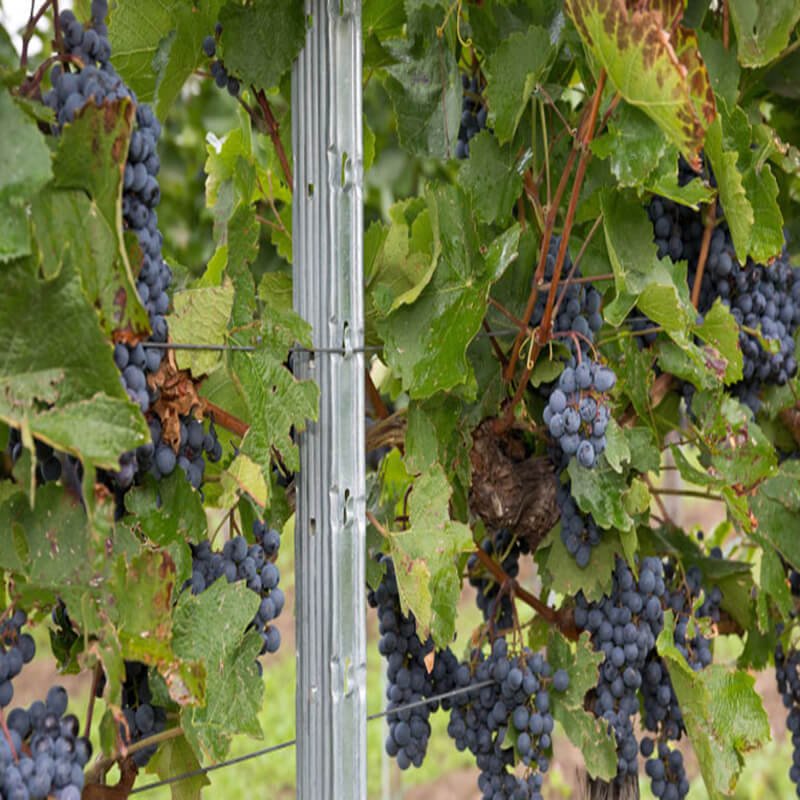
Steel vineyard posts have held up grape rows in California and French vineyards for decades. Instead of a plain T-section, they use a rolled-edge profile — the edges are folded over, which makes the post stiffer and leaves no sharp edge to tear foliage or drip-tape. The wire slots are punched into the sides every 6 inches, starting 39.5 inches from the bottom, so you simply lay the wire in and keep walking.
Most growers run an 8-foot post buried 2 feet, leaving 6 feet above ground for the cordon and catch wires. The 12 gauge post is the heavy-duty option for high-wind sites, heavy crop loads or wider spacing; 13 and 14 gauge are lighter, cheaper and fine for standard rows. For row ends we supply ribbed-back end posts, or you can brace with an H-brace and an earth anchor — the end assembly carries the whole row.
2. Applications
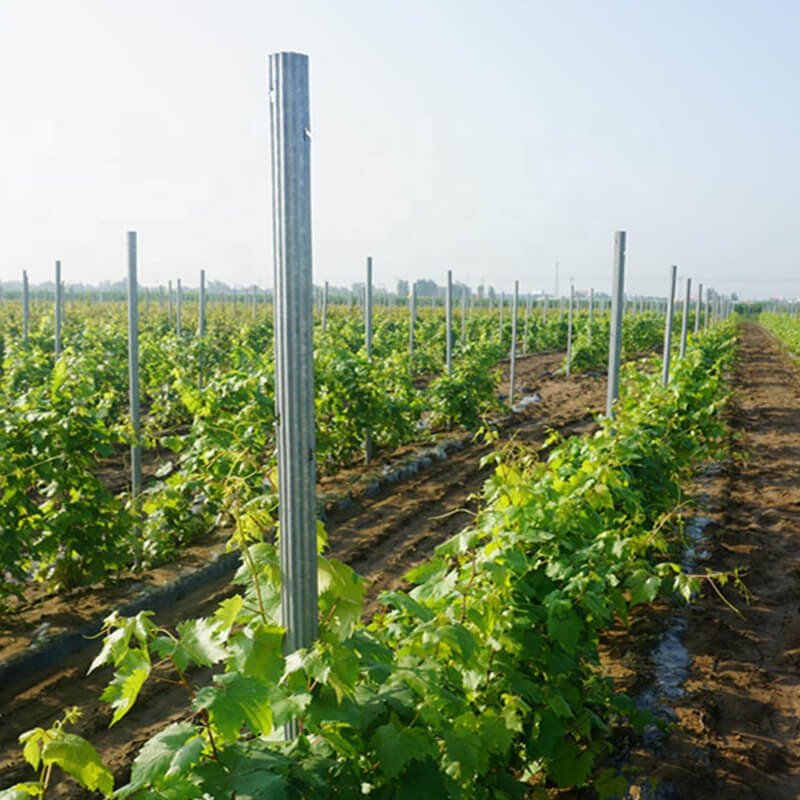
Grape rows — cordon wire, catch wire and foliage wire support. Orchards and cane fruit — kiwi, raspberry and trellised apple. Windy sites where wooden posts pull loose. Mechanically harvested vineyards, where the rolled edge is machine-friendly. End assemblies when paired with ribbed end posts and anchoring hardware.
3. Specifications
| Spec | Range |
|---|---|
| Profile (rolled-edge) | 49×44 mm / 54×30 mm / 50×40 mm typical |
| Steel gauge | 12 / 13 / 14 ga (ASTM A1011 hot-rolled; G90 galv per ASTM A653) |
| Length | 6 / 8 / 10 ft (1.8 / 2.4 / 3.0 m) — 8 ft standard |
| Buried depth | 2 ft typical, 6 ft above ground |
| Wire slots | Punched every 6″, first slot at 39.5″ from bottom; H or U style |
| Coating | Hot-dip galvanized (~275 g/m²) or G90 zinc; bare steel on request |
| End posts | Ribbed-back, heavier gauge; used with H-brace or earth-anchor tie-back |
| Packing | 5–10 pcs/bundle, ~200 pcs/pallet |
4. Key features
- Wire slots every 6″ — set wire height without clips, staples or wire ties.
- Rolled edges — stiffer post, and no sharp edge to cut foliage or drip tape.
- 12 ga option — built for high wind, heavy loads and wide spacing.
- HDG or G90 zinc coating — 20+ year service life outdoors.
- Mechanical-harvester friendly profile and slot spacing.
- Replaces wood — no rot, no splitting, no re-driving; lower lifetime cost.
5. How to install
Step 1 — Drive: Set line posts 2 ft into the ground, 6 ft above. Use a post driver or hydraulic driver; steel posts drive cleanly into most soils.
Step 2 — Space: Space posts 8–12 ft apart for hand-tied systems, up to 20–21 ft where high-tensile wire is used.
Step 3 — Set wire: Drop each wire into the slot at the height you want. No clips needed.
Step 4 — Anchor ends: At row ends use heavier end posts set deeper, braced with an H-brace or tied back to an earth anchor. Most trellis failures start here — build this part properly.
Step 5 — Tension: Tension the wires (see our Trellis Wire page), then train and clip your vines.
Tell us your row length, gauge and quantity — we come back with a real answer.
We supply line posts, end posts and anchoring hardware for complete trellis systems. Custom lengths, gauges and coatings on request.