1. Product introduction
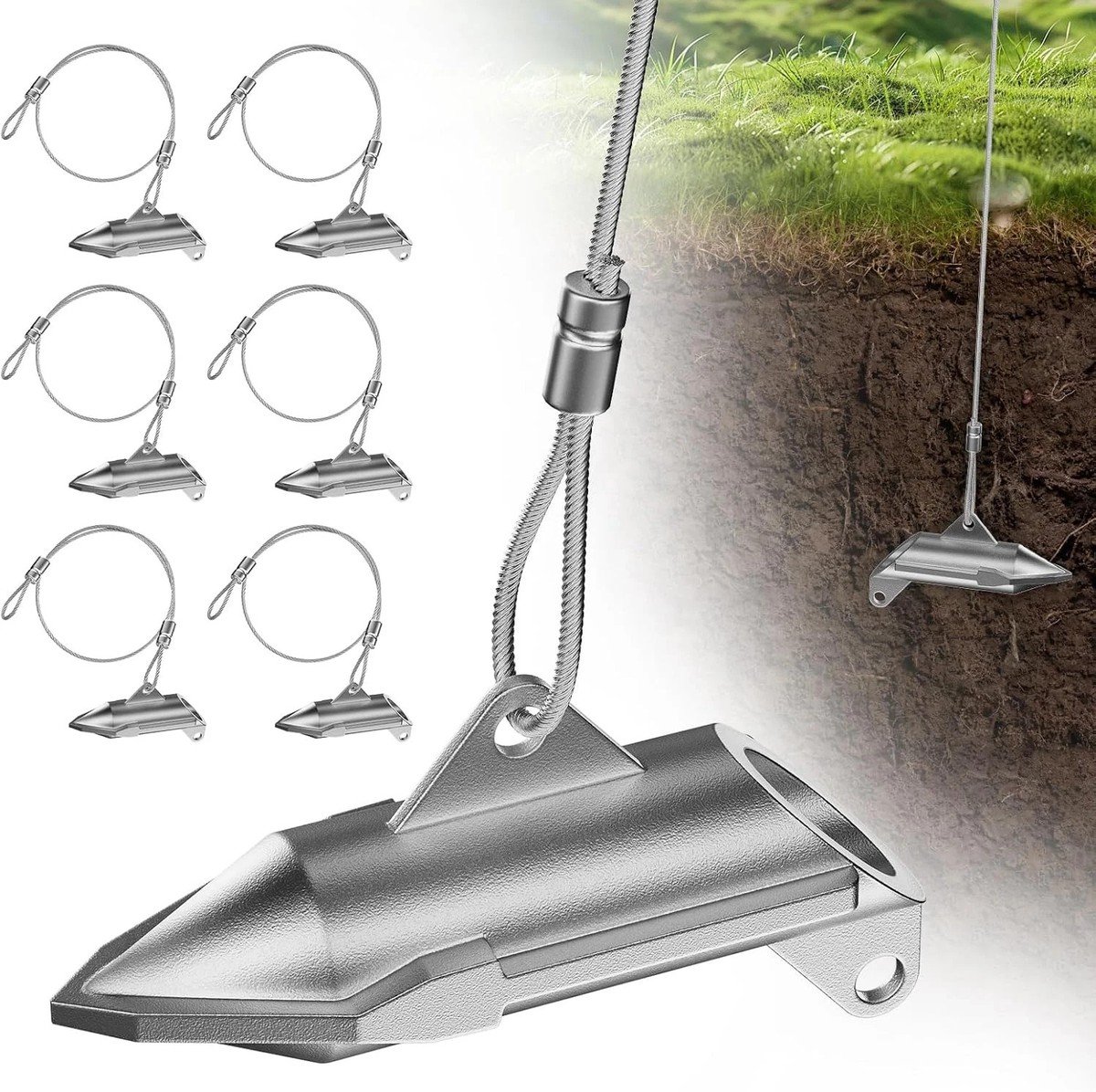
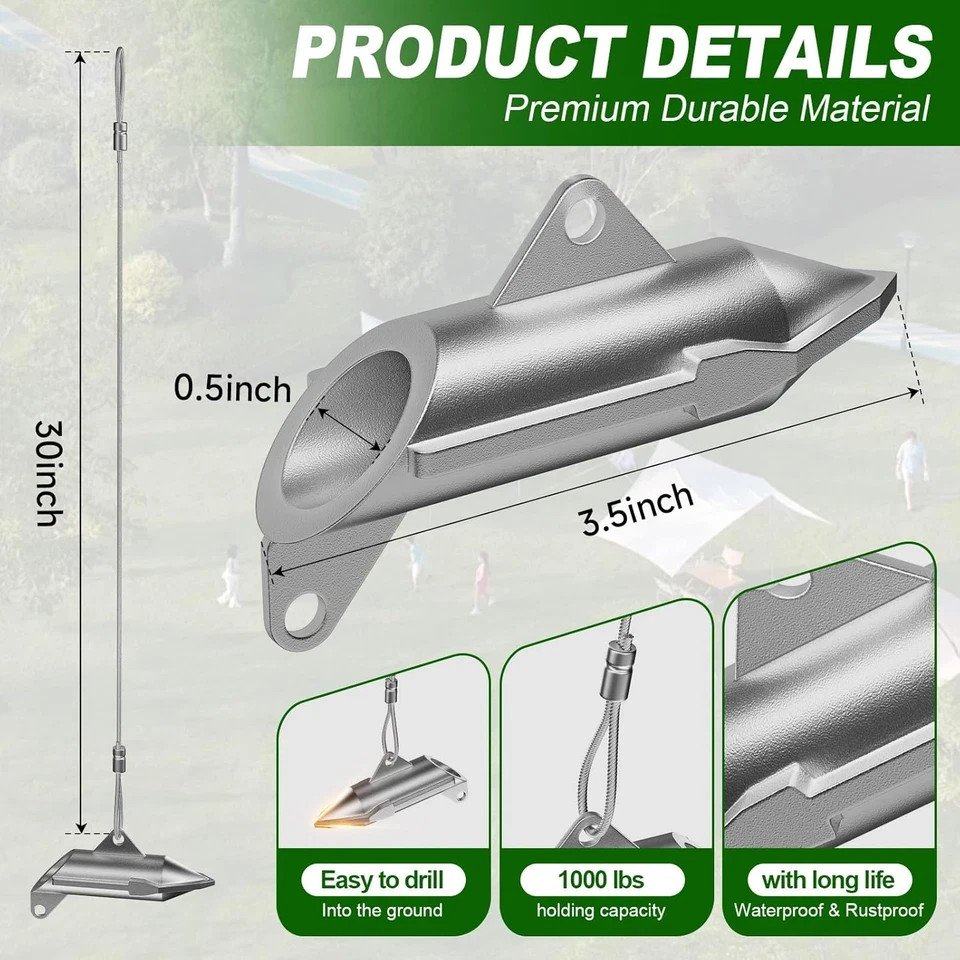
A drive-in earth anchor is a cast metal body with a blind bore at the trailing end that receives a drive rod. A chiseled leading edge and an outturned trailing lip let it penetrate soil and then bite in when loaded. An attachment point near the midpoint takes a cable, rod or wire. Driven to depth and pulled upward, the body pivots roughly 90° to a locked position across the withdrawal force — the same toggle-bolt principle used by driven ground anchors for decades.
Also called duckbill-type or duckbill-style drive-in anchors — they use the same driven, pivoting toggle-bolt action as the well-known duckbill-style anchors, supplied unbranded and built to your specification.
Unlike screw-in (helical) anchors, this type needs no torque, no machinery and no augering — just a hammer and a drive rod. It is the right choice for soft ground, turf, revegetation mats and anywhere you want minimal soil disturbance.
2. Applications
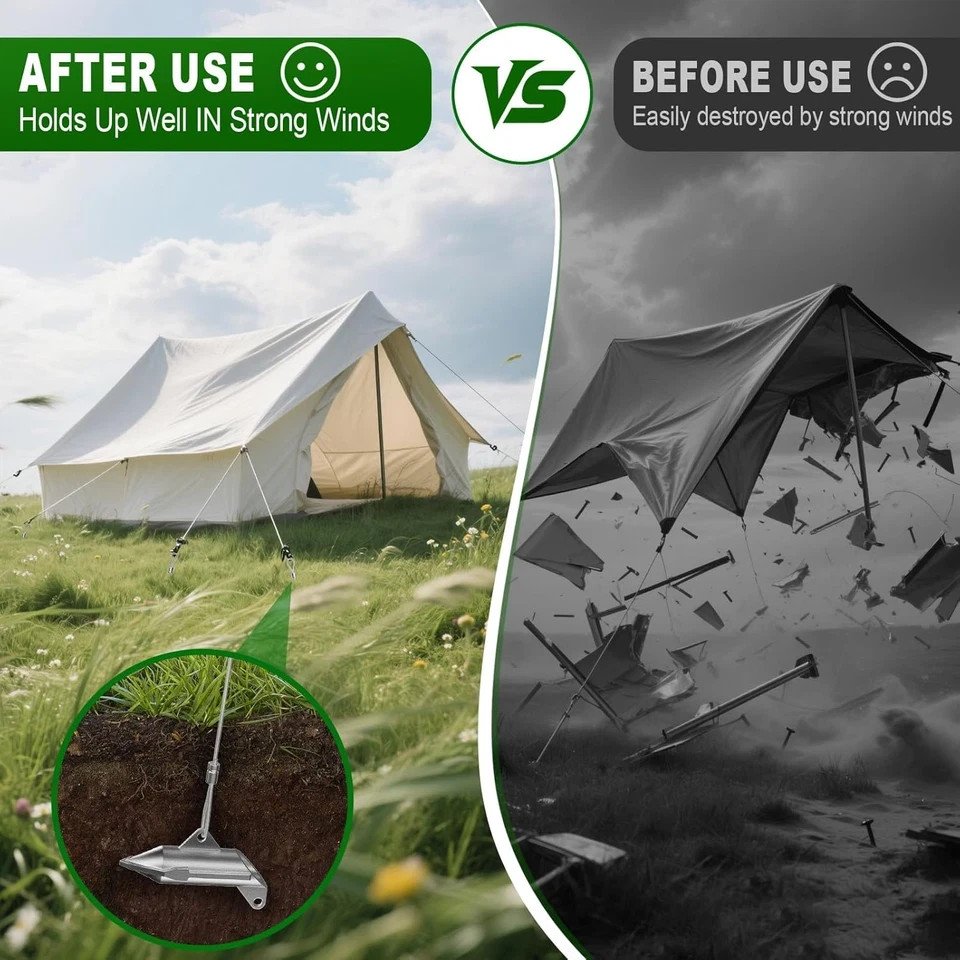
Landscaping & erosion control: turf reinforcement mats, coir logs, slope stabilization, geotextile fixing. Horticulture: tree guy systems, tree root-ball tie-downs, vineyard end stays. Structures: portable buildings, garden sheds, scaffolding, sign and antenna anchoring, fencing and gate tie-downs, anti-theft securing of outdoor equipment.
3. Specifications
- Holding capacity: ~300 lb / ~1,100 lb / ~3,000 lb / ~5,000 lb (1.3 / 5 / 13 / 22 kN, soil dependent)
- Tendon: galvanized aircraft cable 1/16″–5/16″ (stainless optional)
- Material: aluminium alloy (standard) · galvanized ductile iron (hard / rocky soils)
- Finish: mill · hot-dip galvanized · stainless option for corrosion resistance
- Drive rod: matched steel drive rod, sold separately; heavy sizes fit a small jackhammer
4. Key features
- — No excavation: drive straight in, no holes, no digging, no concrete.
- — Minimal soil disturbance: installs in undisturbed soil for a clean, safe site.
- — High holding from a small footprint once rotated to the locked position.
- — Lightweight and portable: hand hammer or small power driver, no heavy plant.
- — Corrosion-resistant materials for years of outdoor service.
- — Instant, verifiable set: the upward pull confirms the anchor is locked.
5. How to install
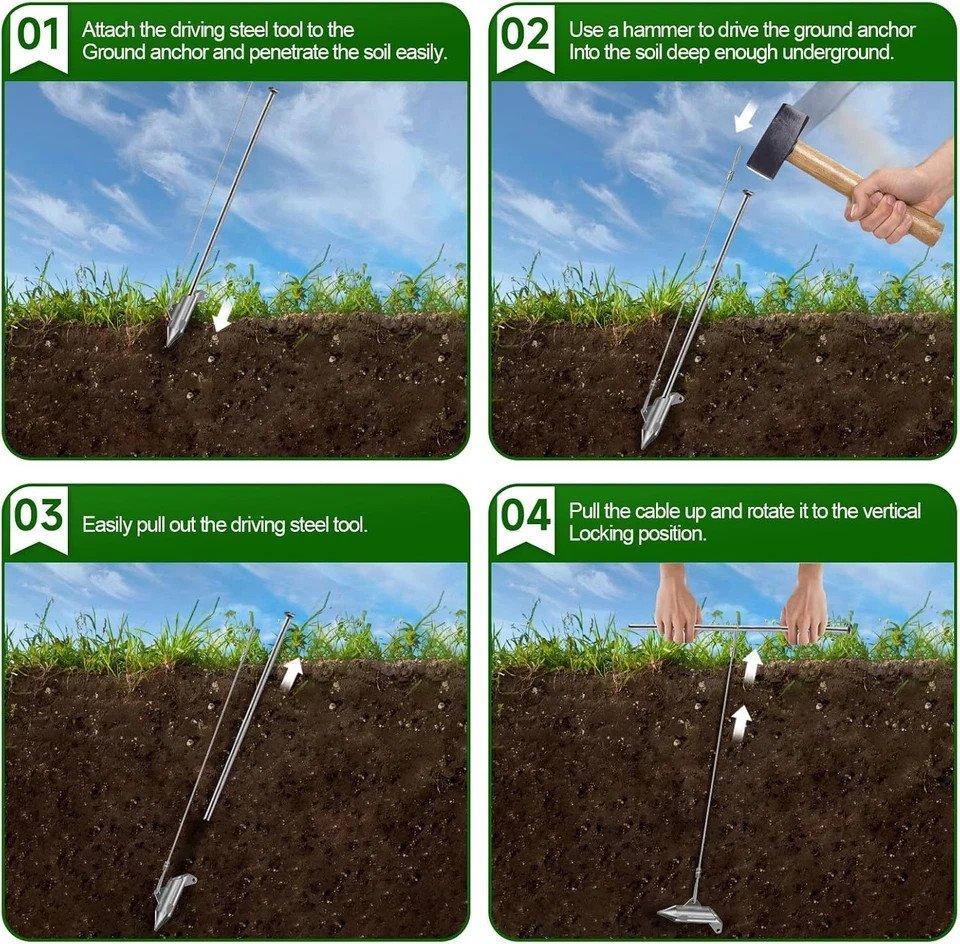
Step 1 — Drive: Slide the drive rod into the anchor’s blind bore and hammer the assembly into the soil to the target depth.
Step 2 — Load: Withdraw the drive rod and attach your cable, rod or wire to the anchor’s attachment point.
Step 3 — Set: Pull upward on the tendon. The anchor rotates to a perpendicular “anchor-lock” position in solid soil. That’s the hold.