
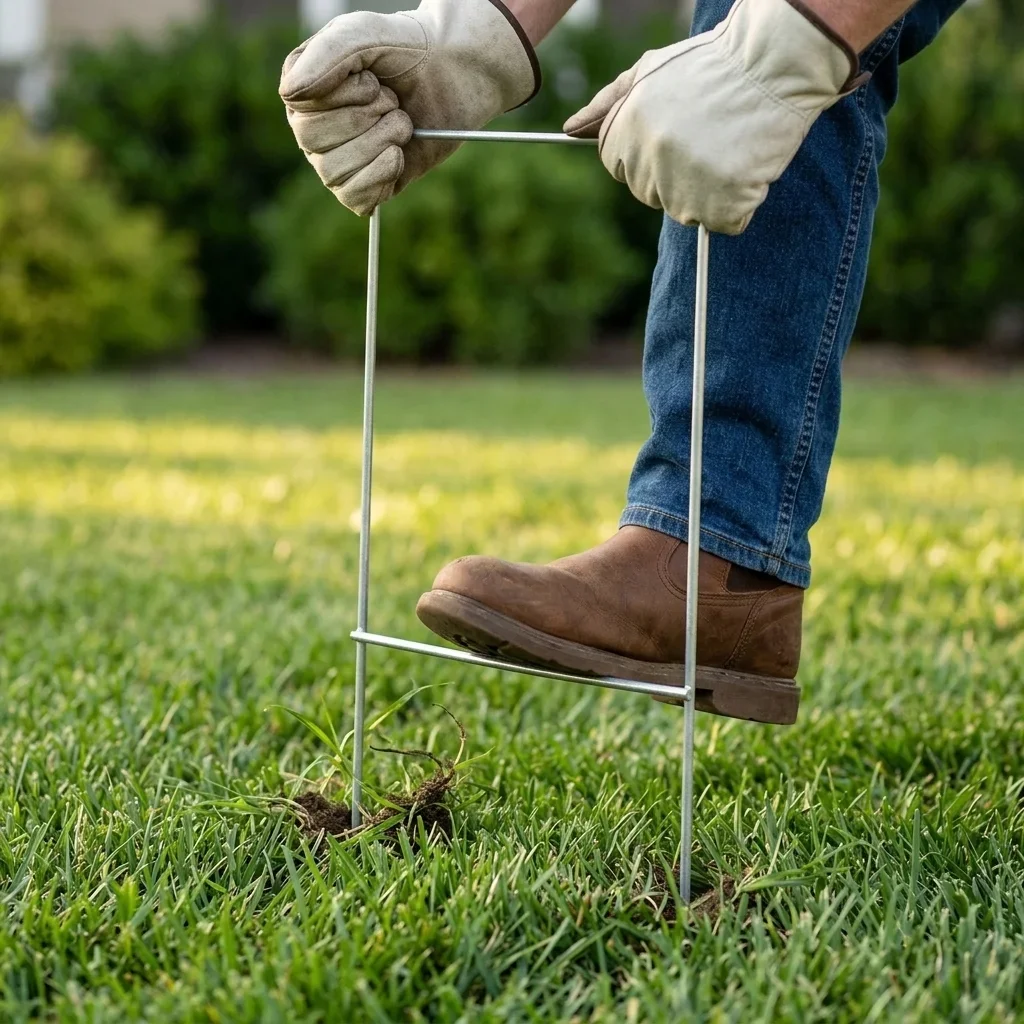
A sign post that goes in with a boot, not a shovel.
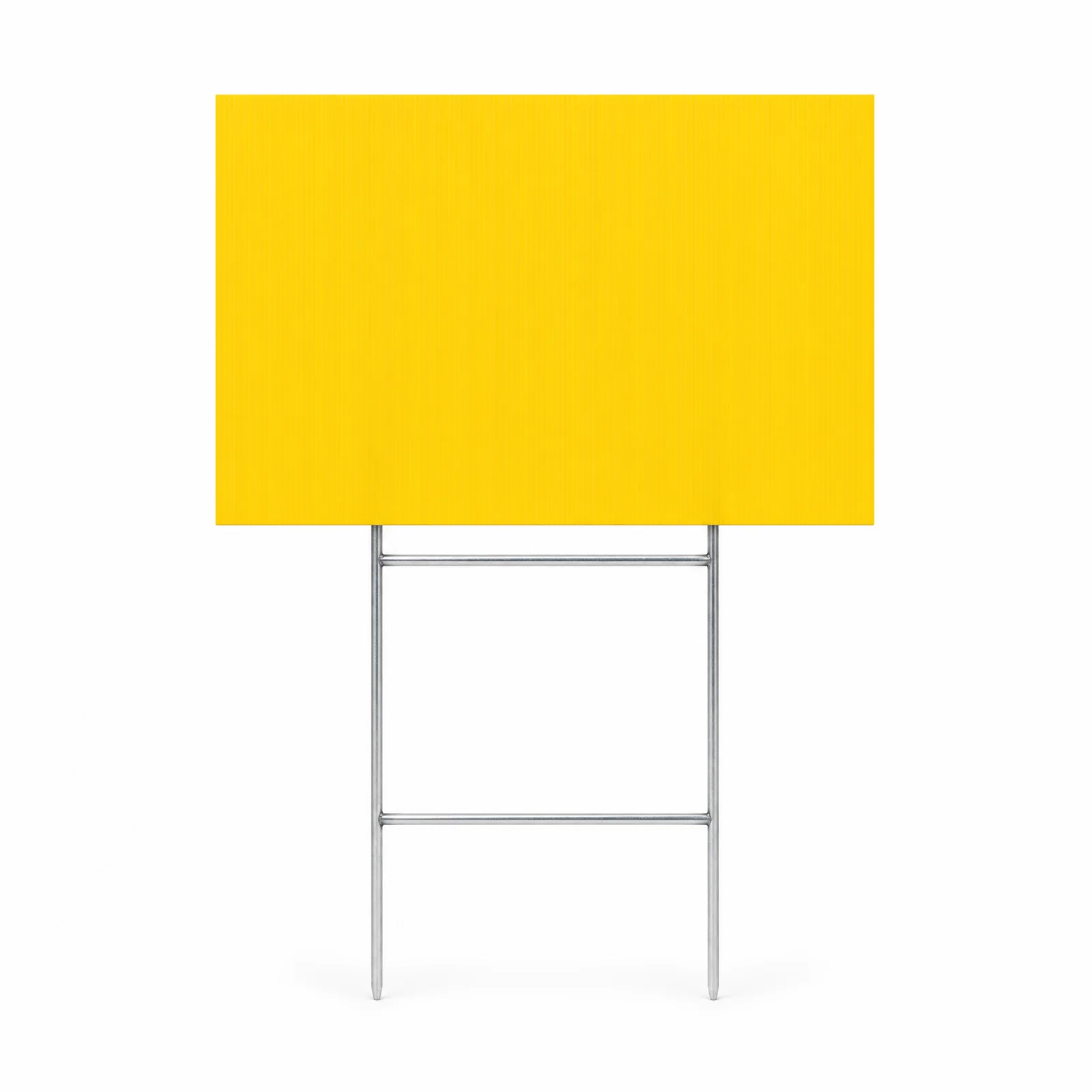
An H-shaped frame welded from 9-gauge galvanized wire: two legs, two crossbars, four welded joints. The legs slide up into the flutes of a 4 mm coroplast panel, the lower crossbar sits under the bottom edge and carries the weight, and the ends go into soil — pointed for hard ground, flat as standard. The panel stops the wire twisting and the wire stops the panel folding. Lift it out by the crossbar and it goes back in next season.

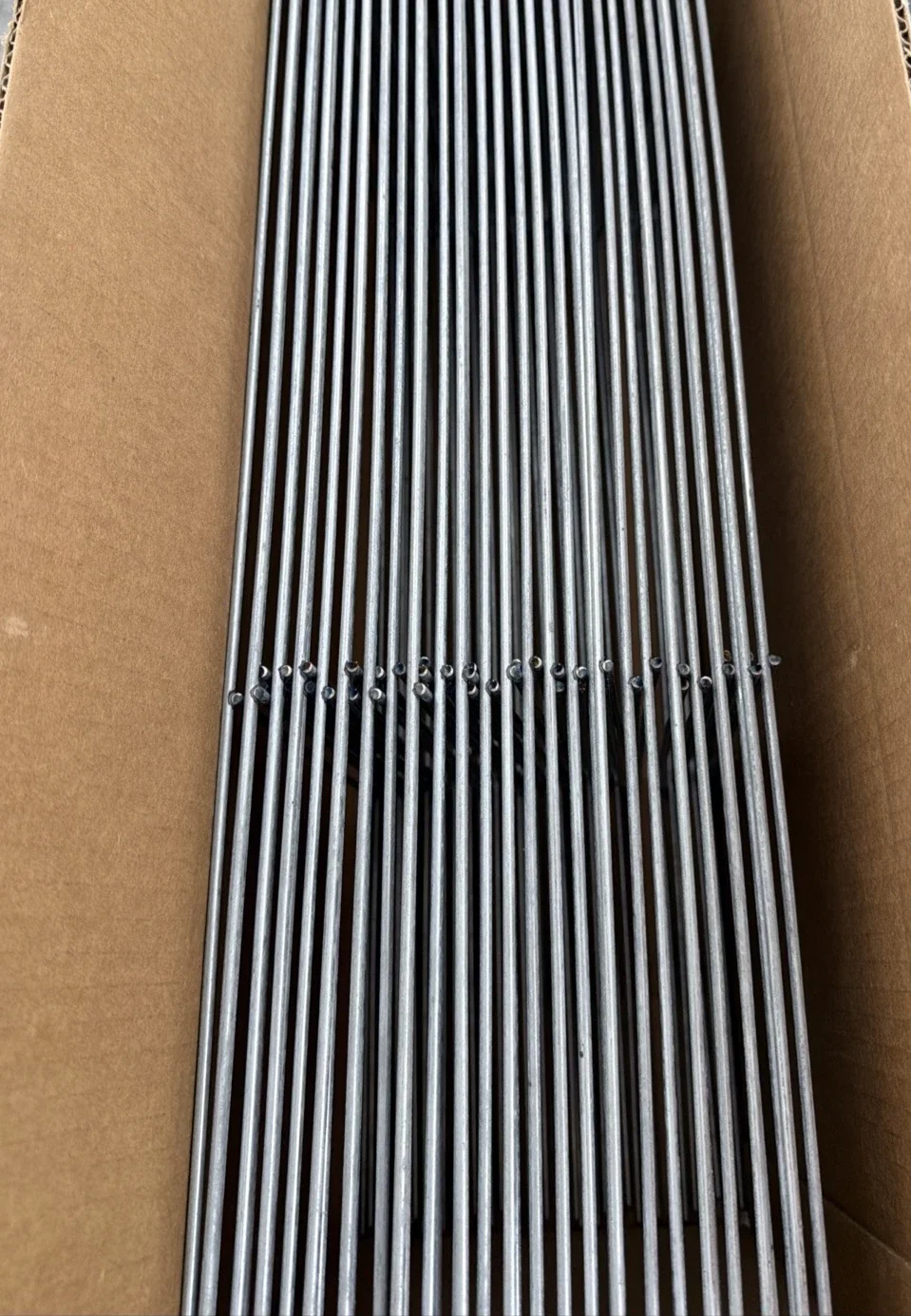
Pointed or flat — same frame, different way into the soil.
Slips through hard ground
Ground to a point, the tip parts the soil instead of fighting it. Pointed ends slip through compacted ground, dry turf and gravel, where a blunt end has you fighting the ground before it will go in.
Straight cut
Cut straight across the wire, so the end face is a flat circle the size of the wire section, and that whole face bears on the soil. Fine on worked beds, fresh mulch and soft turf; on compacted or dry ground it takes more weight on the crossbar than a pointed stake does.
Both ends sit on the same 9-gauge welded frame with the same four joints. The end type is specified per order, and either one is quoted at the same size and gauge.
Two legs, two crossbars, and nothing else to go wrong.
Short answer
An H frame stake is an H-shaped frame of 9-gauge galvanized wire: two legs that slot into the vertical flutes of a corrugated panel, and a crossbar under the bottom edge that carries the panel weight. The ends come pointed or flat: a point slips through compacted ground, a cut end takes more weight on the bar. Fitting one is a boot on the lower crossbar and steady pressure — no screws, no drilling, no bracket. Standard is 9 gauge in 10 x 15 or 10 x 30 in; the heavy-duty version uses a 1/4 in rod as the lower bar, so the stake survives being pulled and replanted.
1. Product introduction
An H frame stake is welded wire, and that is the whole of it. The two long legs slide up into the hollow channels that run through corrugated plastic; the crossbar is welded under the bottom edge of the panel; the ends disappear into the ground — pointed where the ground is hard, flat as standard. Nothing is screwed, drilled or bracketed.
It works because the panel and the stake brace each other. Once the legs are seated, the sign stops the wire from twisting sideways and the wire stops the sign from folding over. Take either half away and the assembly goes limp — which is also why most failures in the field trace back to legs that never went fully into the flutes.
The trade calls the same part an H-stake, an H-frame, a step stake, a coro stake or a sign stake; in hardware catalogues it also turns up as a plant support stake or row marker. The names travel, the geometry does not: two legs, two crossbars, four welds.
Wire gauge is where cheap and durable part company. 9 gauge is the working standard — it springs back after a gust and ignores a boot. 10 and 11 gauge are the value tier, and they behave exactly like thin wire: they bend at the ground line, right where the bending stress is highest, and the rust that follows stains the bottom of a white panel.
2. Applications
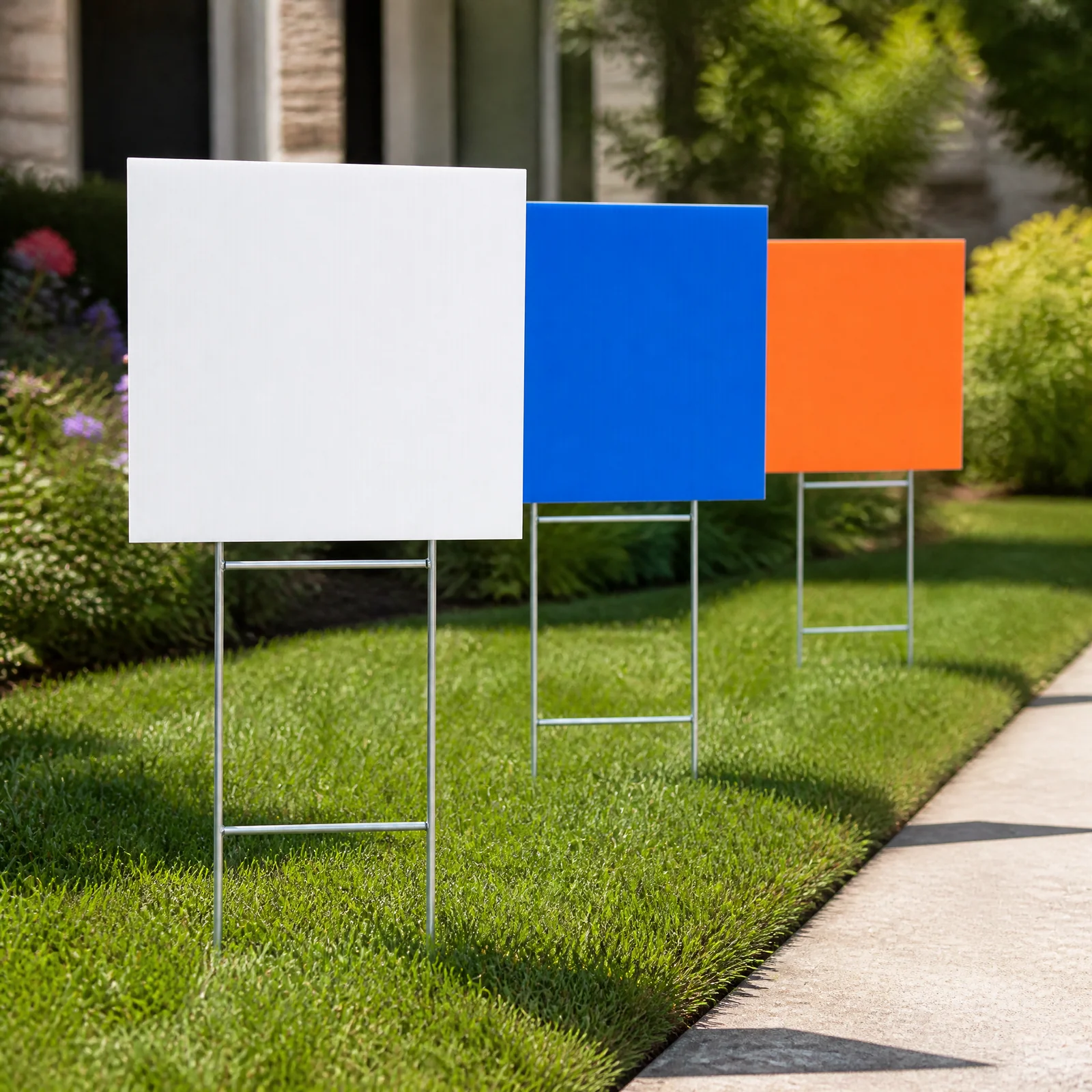
Real estate: open house, for sale and directional boards on verges. Campaigns: precinct and polling-day signs, planted by the hundred. Events and retail: festivals, grand openings, seasonal promotions. Construction: permit boards, warning notices, site direction. Schools and community: graduation signs, sports fixtures, car park rules.
Garden and landscape use the same geometry for different work: row markers between crops, plant labels in a nursery bed, the edge of weed membrane or frost fleece that keeps lifting. Two legs hold a line where a single pin lets it wander.
3. Specifications
| Stake size (W x H) | Carries signs up to | Typical wire | Where it earns its keep |
|---|---|---|---|
| 10 x 10 in | Riders, arrows, small directional panels | 9 gauge | Sign riders bolted under a main panel |
| 10 x 15 in | 12 x 18 and 18 x 24 in | 9 gauge | Lawns, medians, open-house corners |
| 10 x 24 in | 24 x 24 in and smaller | 9 gauge | Mid-size panels, tighter ground |
| 10 x 30 in | 24 x 18 and 24 x 36 in | 9 gauge | The default: grass, verges, snow country |
| 6 x 30 in | Small and narrow panels | 9 gauge | Where the lower rung still helps but width is tight |
| 15 x 30 in | 24 x 36 in and larger | 9 gauge | Wide panels that rock side to side |
| 30 x 30 in | 4 x 4 ft sites | 9 gauge, heavy base | Construction and development boards |
Rule of thumb: — Panel size decides the stake. Width is measured leg to leg, and the stake only has to be comfortably narrower than the panel — the flutes nearest the centre of a sign are the strongest part of it.
| Grade | Top frame | Base / bottom rung | Behaviour in the field |
|---|---|---|---|
| Economy | 10–11 gauge galvanized wire | Same wire | Goes in fast, bends under a boot or a mower strike |
| Standard | 9 gauge galvanized wire | 9 gauge crossbar | The industry reference: holds a 4 mm panel through normal weather |
| Heavy duty | 9 gauge galvanized wire | 1/4 in (3 gauge) rod, stepped | Reusable season after season; shrugs off wind and rocky ground |
4. Key features
- Tool-free install — seat the legs, stand the sign up, press the crossbar down with a boot.
- 9 gauge galvanized wire as standard, so the stake springs back instead of kinking.|Welded frame — both crossbars are welded to the legs at 90 degrees.
- Heavy-duty variant with a 1/4 in base rod and stepped foot, built to be pulled and replanted.
- Zinc coating keeps ground-line corrosion out of the panel edge and off the sign face.
- Fits any vertical-flute corrugated panel, 4 mm standard and up to 6 mm.
- Flat-packed: a thousand stakes travel in a fraction of the space of a thousand posts.
- Reusable across campaigns when it is lifted by the crossbar instead of dragged out by the panel.
- Custom lengths, wire diameters, coatings and colours made to drawing.
5. How to install
Step 1 — Check the flutes: The channels must run vertically. A landscape panel has horizontal flutes and cannot take an H stake.
Step 2 — Seat the legs: Lay the panel face down and slide both legs into two flutes the same distance from the centre. If a leg stops early, you have found a crushed channel — move one over instead of forcing it.
Step 3 — Stand it up: The crossbar should sit under the bottom edge of the panel, carrying the weight rather than letting the sign sag onto the soil.
Step 4 — Press on the crossbar: Foot on the bar, steady pressure, in stages. Never push the face of the sign: that buckles the panel and drives the legs back out through the front.
Step 5 — Set the depth: Roughly the bottom third of the stake belongs underground, and at least 6 in of it. On an exposed site, lean a few degrees into the prevailing wind and punch two relief holes near the top corners of a wide panel.
Step 6 — Take it out the right way: Rock the stake side to side to break the soil grip, then lift by the crossbar with the sign still attached. Pulling the panel alone tears the flutes and retires the sign.
One limit worth knowing: — Not every position takes a stake. Paved forecourts, sidewalks and exhibition floors have nothing to drive into, and a weighted or flexing A-frame is the honest answer there.
H frame stakes, answered straight.
What is an H frame stake used for?
It holds a corrugated plastic sign upright without a post. The legs go into the sign’s vertical flutes, the crossbar sits under the bottom edge, and the ends go into soil — pointed or flat, depending on the ground. The same stake is used to mark crop rows and hold plant labels in a nursery bed, because the shape gives you two anchoring points instead of one.
What size stake do I need for my sign?
Work from panel width, not height. Up to 24 in wide takes a 10 x 15 in stake. From 24 to 36 in, move to a 10 x 30 in stake or use two shorter ones. Panels from 36 to 48 in want at least two 10 x 30 in stakes, and a 4 x 8 ft board usually needs three or a rigid frame. Add roughly ten percent spare for the ones a mower finds.
One stake or two per sign?
One stake is enough up to about 24 in wide in firm ground. Anything wider, or any sign going into sand, fresh mulch or an exposed corner, gets two: a single stake lets a wide panel pivot in the wind until the flutes tear.
Will an H frame stake hold up in wind?
Wind rarely snaps the wire — it levers one leg up and out. So depth beats thickness: sink the bottom third, lean the stake a few degrees into the prevailing wind, and punch two coin-sized relief holes near the top corners of a wide panel. In sand or loose fill, use a longer stake or a second one before you buy heavier wire.
What sign material does it fit?
4 mm corrugated polypropylene — coroplast, corflute, correx — is the standard fit, and 4 to 6 mm panels work with the same frame. The flutes must run vertically. A landscape-orientated panel has horizontal flutes and cannot take an H stake at all.
Do I need grommets in the sign?
No. Grommets are for hanging or tying a panel. On a staked sign they are wasted money and a hole where water gets in.
What is the difference between standard and heavy duty?
Standard is 9 gauge wire throughout. Heavy duty keeps the 9 gauge top but builds the legs, bottom rung and step from 1/4 in rod, which is what lets a crew pull it out and drive it again next season. The heavy version is roughly twice the weight per stake and is the one to specify for rocky ground or multi-campaign use.
Which wire gauge should I ask for?
9 gauge for anything that has to survive a season outdoors. 10 and 11 gauge are the value tier: they cost less, bend at the ground line, and need replacing. If you can bend a leg into an S with two fingers, that is how it will behave in soil under a wide panel.
Can I reuse H frame stakes?
Yes, if the zinc is intact. Rock the stake side to side to break the soil grip, then lift it by the crossbar with the sign still attached. Pulling the panel on its own tears the flutes and ends the sign’s life.
Where does an H stake not work?
Paved ground. Sidewalks, car parks, forecourts and exhibition halls have nothing to drive into, and no amount of extra wire changes that — switch to a weighted or flexing A-frame for those positions.
Tell us the panel size and the ground, we will tell you the stake.
We make H frame stakes to order: 9 gauge and heavy-duty 1/4 in base, hot-dip or electro-galvanized, powder coated, any length from 10 in to 30 in and beyond. Send a drawing or a sample and we quote against it.