
Helical piles that carry the load the moment they stop turning.
A galvanized steel pile with welded helix plates that screws into the ground like a wood screw — no concrete, no excavation, no cure time. You verify the capacity while it installs, then build on it the same day.
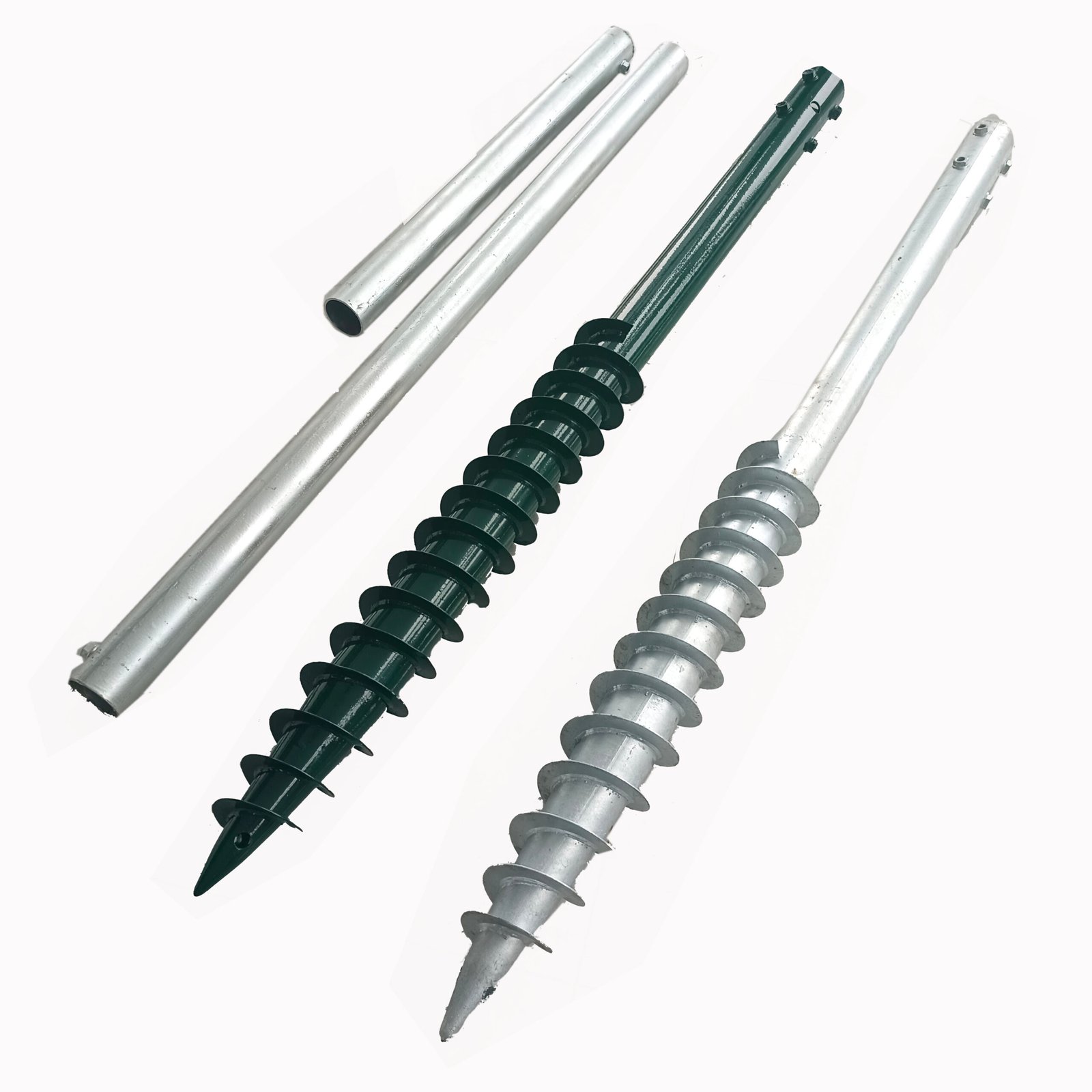
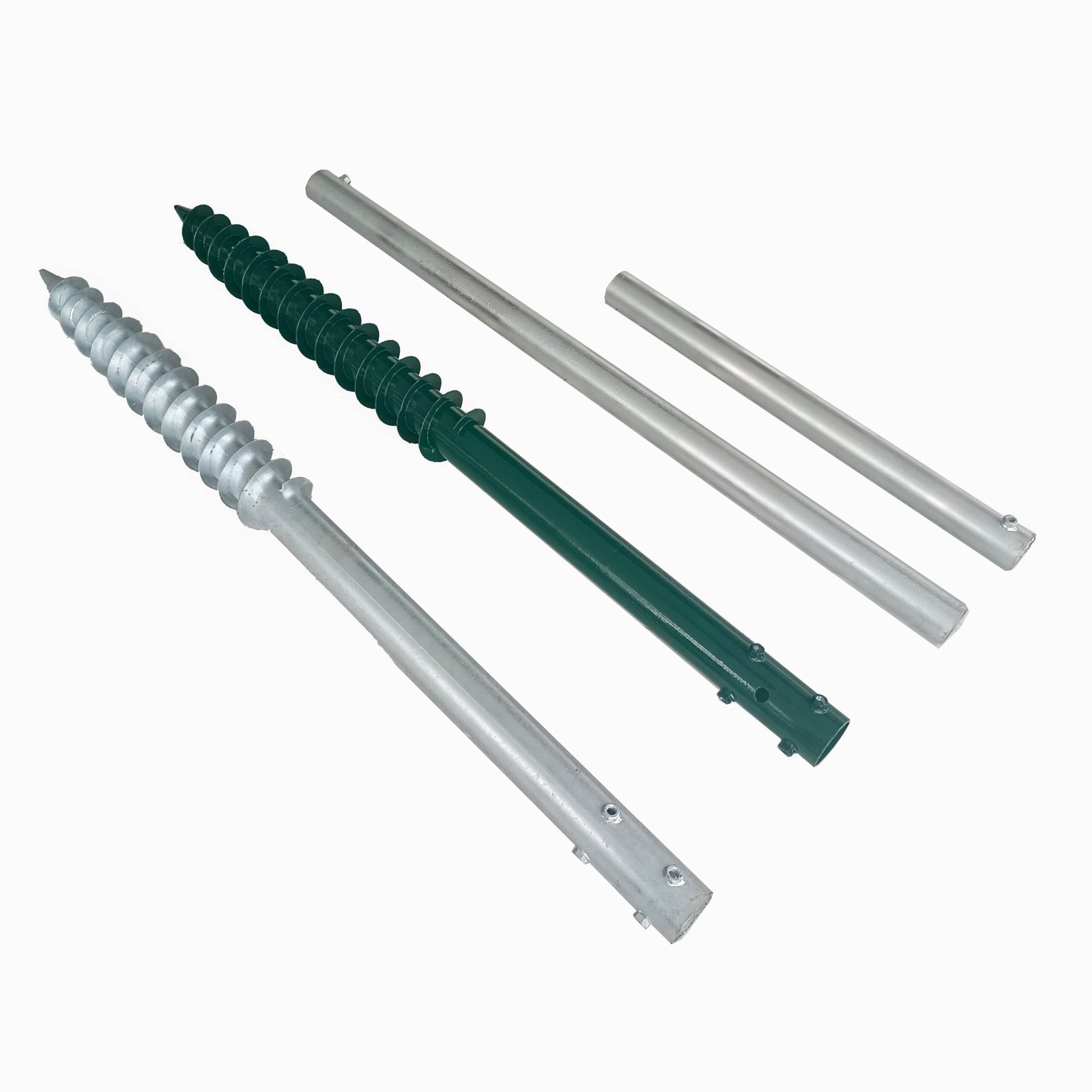
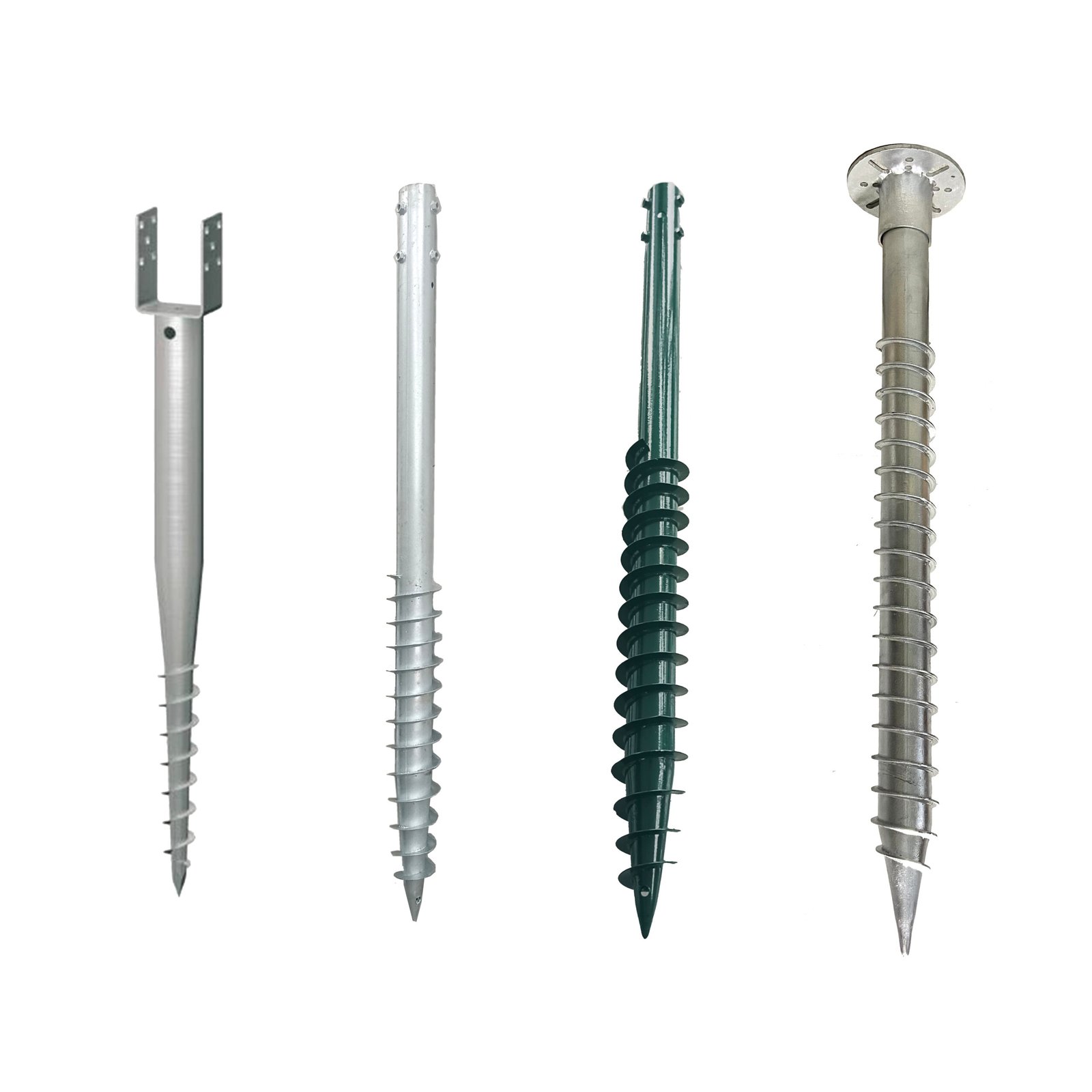
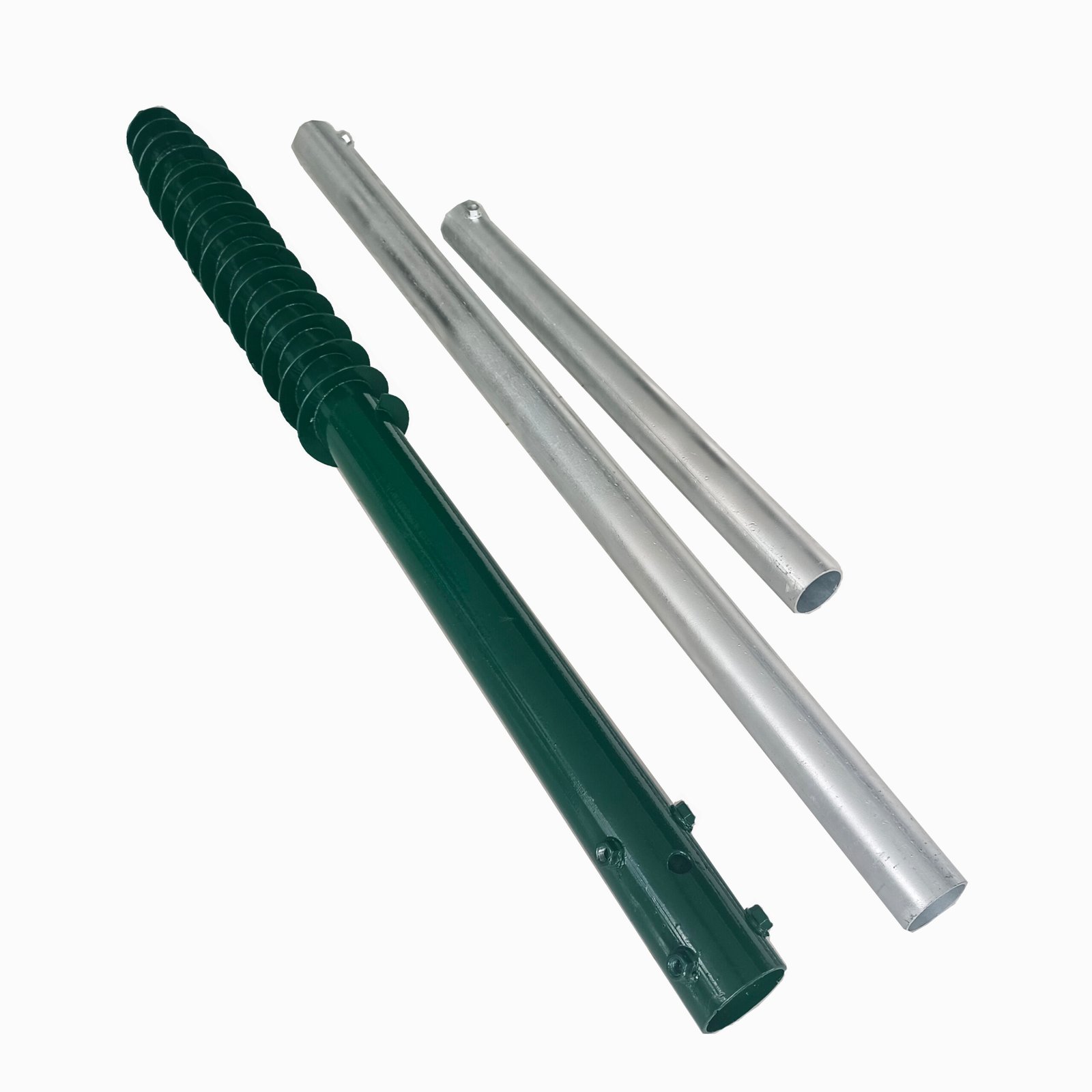
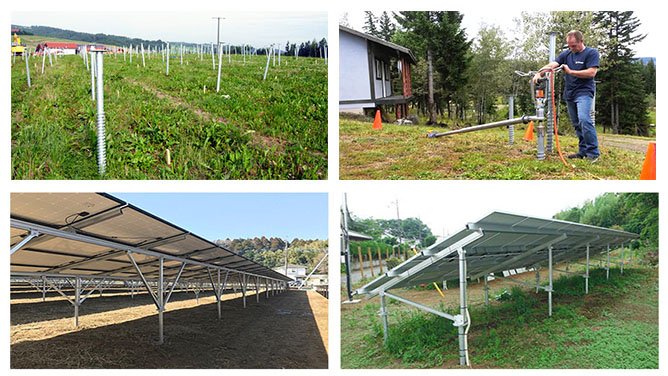
What you get with CHANGE helical piles.
1. Product introduction
A helical pile — also called a screw pile or ground screw — is a steel shaft with one or more spiral bearing plates welded near the tip. Rotated into the ground, the helix pulls the pile downward the way a wood screw pulls into timber, until it reaches a soil layer strong enough to carry the design load. Because the helix generates both compression and uplift capacity, the pile works for pushing down and pulling up — which is what makes it useful for foundations and anchors alike.
The idea is not new — Alexander Mitchell screwed the first documented piles into the Thames mud for a lighthouse in 1838, and several 19th-century lighthouses still stand on their original piles. What changed in the last decades is the hardware: hydraulic drive heads now turn a pile with tens of kilonewton-metres of torque, so a small excavator installs one in minutes.
CHANGE helical piles are made from structural steel to ASTM A500 Grade C or S355, welded to CSA-standard quality, then hot-dip galvanized to ASTM A123 / EN ISO 1461 with 70–120 µm of zinc. The standard square-shaft series follows the industry torque-to-capacity correlation — capacity Q = Kt × T, with Kt ≈ 10 ft⁻¹ for square shaft — so the installation torque tells you the pile’s capacity in real time, the same method used in ICC-ES AC358 design.
2. Applications
Deck, garden room, shed and carport foundations. Fence and gate posts. Solar panel racks and ground-mounted arrays. Greenhouses and farm shelters. Boardwalks and walkways. Signage and lighting poles. EV charger pedestals. Temporary structures — the pile unscrews and reuses elsewhere. Underpinning and foundation stabilization for existing buildings.
3. Specifications
| Parameter | Typical range / standard |
|---|---|
| Shaft type | Square bar (1.25–2.25 in / 32–57 mm) or round pipe (Ø48–219 mm) |
| Wall thickness (round pipe) | 2.9–12.5 mm |
| Helix diameter | 150–610 mm (common 200–350 mm), single or multi-helix |
| Number of helices | 1–4, spaced ~3× helix diameter |
| Helix thickness | 12–20 mm |
| Helix pitch (lead) | 50–80 mm |
| Standard length | 0.6–3.5 m; extension sections add depth for weak soils |
| Steel grade | ASTM A500 Grade C (60 ksi / 350 MPa) or S355J2H / S235 |
| Coating | Hot-dip galvanized per ASTM A123 / EN ISO 1461, 70–120 µm zinc |
| Design life | 50–100 years in typical soil conditions |
| Certification | ICC-ES evaluation reports; EN 1090 CE (Eurocode 7) on request |
Note: — Capacity reference — industry-standard square-shaft ratings (Kt = 10 ft⁻¹):
| Shaft size | Torque rating | Ultimate capacity (approx.) | Typical use |
|---|---|---|---|
| 1.5 in square (SS150) | 7,000 ft-lb | 70,000 lb (312 kN) | Decks, sheds, small structures |
| 1.75 in square (SS175) | 10,500 ft-lb | 105,000 lb (467 kN) | Heavier decks, solar racks |
| 2.875 in pipe (288) | 9,000 ft-lb | 100,000 lb (445 kN) | High lateral load / soft soil |
| 3.5 in pipe (350) | 13,000 ft-lb | 120,000 lb (534 kN) | Commercial, deep bearing layers |
Final capacity depends on soil conditions, embedment depth and helix configuration — a geotechnical check before ordering is the normal practice. We also manufacture round-pipe series with Kt ≈ 7–9 ft⁻¹ for soft soils and high lateral loads.
4. Key features
- No excavation, no concrete, no curing — the pile carries load the moment installation stops.
- Torque-to-capacity verification — capacity is confirmed in real time from the installation torque reading.
- Hot-dip galvanized, 50–100 year design life in typical soils.
- Works in clay, sand, gravel and frozen ground — all-season installation.
- Removable and re-usable — unscrew, relocate, rebuild.
- Extendable with extension sections for weak or deep soils.
- Clean site — no spoil, no mud, no vibration; ideal next to existing structures.
- Custom shaft, length, helix count and brackets to match your loads.
5. How to install
Step 1 — Survey: Check for underground utilities, note the soil type and frost depth, then mark each pile position from the layout.
Step 2 — Pre-drill: Only in very hard, frozen or stony ground — drill a small pilot hole slightly smaller than the shaft to guide the pile.
Step 3 — Drive: Rotate the pile in with an excavator-mounted or handheld drive head, keeping it vertical. Watch the torque gauge — capacity comes from the final torque, not the depth.
Step 4 — Level: Stop at the target torque, then trim the top or use an adjustable head to set the exact finished elevation.
Step 5 — Connect: Bolt on the bracket, flange or post base and mount your beam or structure — it is load-bearing immediately, no waiting.
Step 6 — Verify: Keep the torque log for the record; where required, run a static load test to confirm the design.
Tell us your loads, soil and quantity — we come back with a real answer.
We supply helical piles, extension sections and brackets for complete screw-pile foundations. Custom diameters, lengths, helix layouts and coatings on request.